The future energy system: how home smart control and predictive control (MPC) support the green transition
Why smarter home electricity use is part of the future energy system, not just a convenience feature.
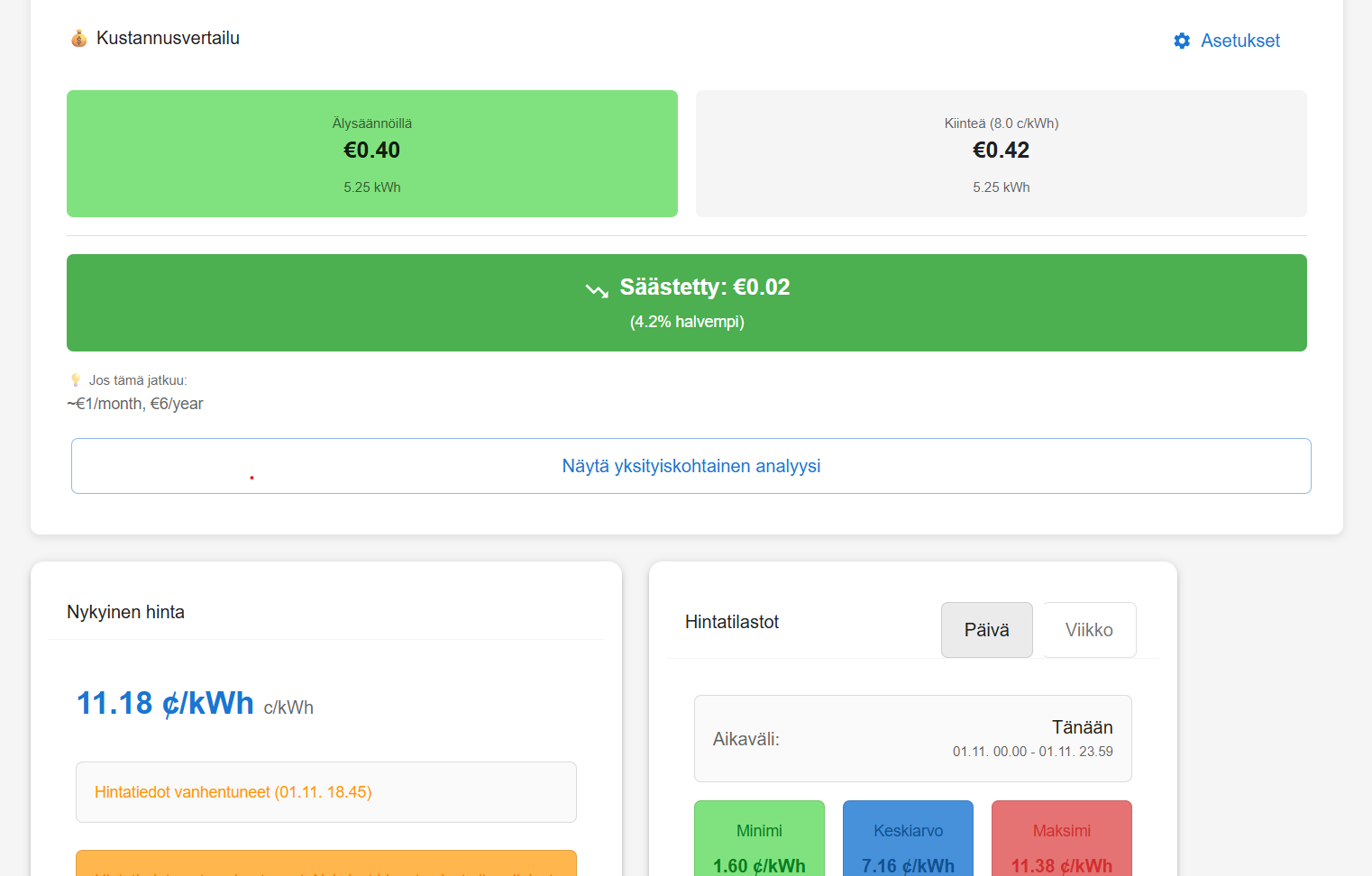
The future energy system: how home smart control and predictive control (MPC) support the green transition
The grid is changing — customers become active participants
The traditional view of the power system:
- power plants produce
- households consume
- electricity flows one way
The green transition changes this:
- production becomes variable (wind, solar)
- the grid needs flexibility on the demand side too
- households become active parts of the system, not passive consumers
Home smart control, Shelly devices and predictive control (MPC) are practical tools for this shift.
Variable production requires flexible consumption
Wind and solar are clean, but:
- they produce when it’s windy or sunny
- not necessarily during traditional consumption peaks
The solution can’t be only more backup plants or huge batteries. It’s often more effective to:
- match consumption to production
- shift use to hours when electricity is abundant and cheap
This doesn’t work with manual timers. You need:
- automation
- data (prices, weather, load)
- decision-making (an automatic plan and smart control)
That’s exactly what predictive control (MPC) is designed for.
Predictive control (MPC) at home — a small process in your house
Industry has long:
- optimized production based on electricity prices
- exploited process flexibility
Now the same logic comes to homes:
- water heaters, EV charging, heating and other loads form a small “process”
- Predictive control (MPC) creates a plan for that process: how it should run over the next hours and days
Shelly devices provide:
- a robust interface to physical devices
- reliable ways to control loads
- accurate measurement of consumption
From a homeowner’s perspective:
- consumption doesn’t just “happen” — it becomes controlled and intentional
How does one home affect the bigger system?
It’s easy to think one household doesn’t matter. But:
- if thousands of homes shift consumption, peak power drops significantly
- this can reduce the need for fossil peaker plants
Example:
- if 10,000 homes shift 2 kW away from a peak hour, that’s 20 MW
- already the size of meaningful balancing capacity
This is exactly what:
- the future grid needs
- market models (like market pricing) already incentivize
A fair transition: savings for households too
The green transition can’t rely only on higher bills. A successful transition:
- provides economic benefits to people who act smart
- encourages smarter energy use instead of hardship
Predictive control (MPC) + Shelly:
- reduce your bill directly
- make flexibility easy for normal users
- give a concrete feeling: “I benefit, and I also help the system”
The future: dynamic pricing, aggregators and energy services
Over time it becomes more common that:
- price volatility increases
- services emerge to aggregate flexibility across many homes
- households can even earn by offering flexibility
A Shelly home controlled by predictive control (MPC) fits naturally into this world:
- your loads can be partially coordinated via aggregators
- you receive compensation
- electricity use becomes transparent, controlled and planned
Technically:
- Predictive control (MPC) ensures your comfort limits are respected
- Shelly ensures execution is reliable
- the user gets clear UIs and reports
Summary: a smart home is part of a greener power system
The future energy system is:
- distributed
- variable
- flexible
To make it work we need millions of small, smart decisions — every day. Predictive control (MPC) and Shelly make those decisions automatic:
- costs go down
- emissions go down
- the grid stays stable
You don’t need to be an energy engineer — it’s enough to let your home’s intelligence do the work.